

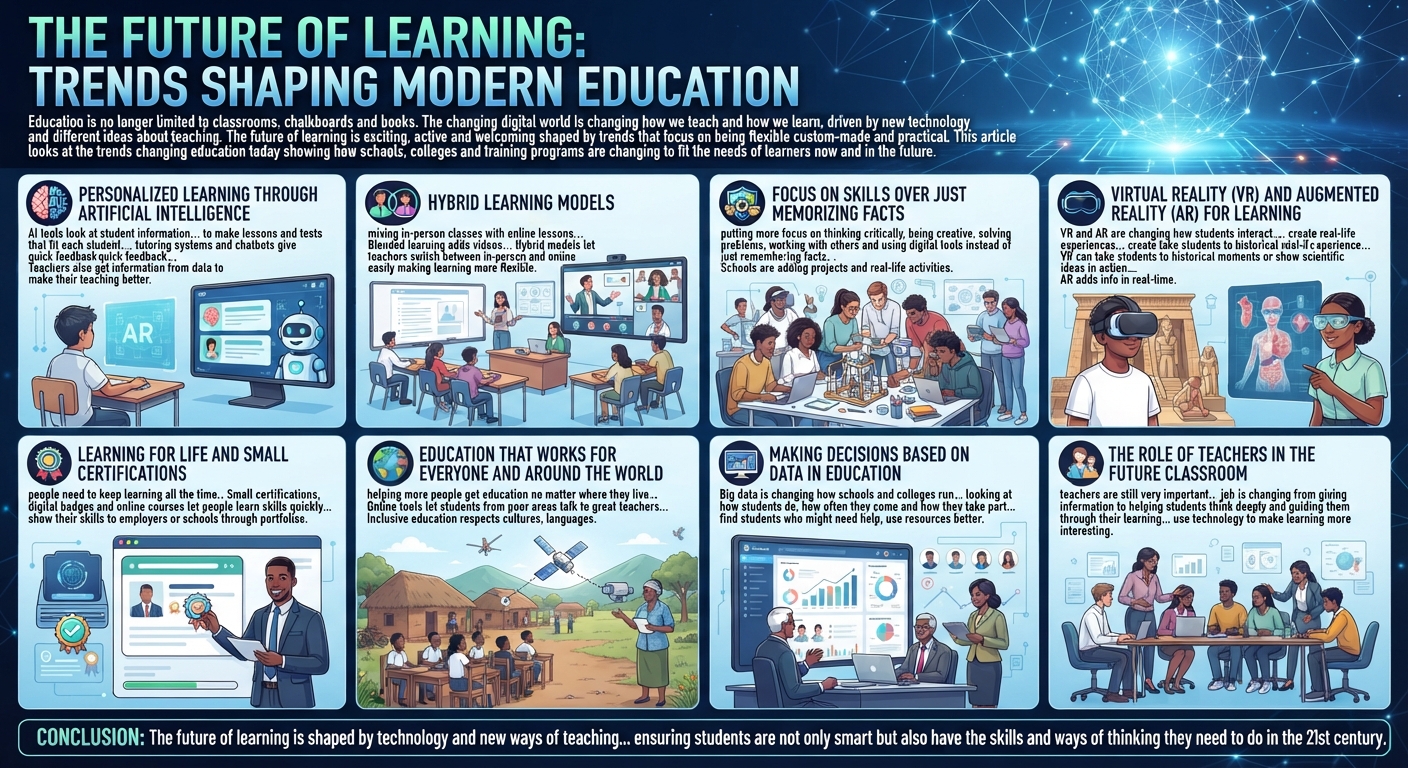
Education is no longer limited to classrooms, chalkboards and books. The changing digital world is changing how we teach and how we learn, driven by new technology and different ideas about teaching. The future of learning is exciting, active and welcoming shaped by trends that focus on being flexible custom-made and practical.
This article looks at the trends changing education today showing how schools, colleges and training programs are changing to fit the needs of learners now and in the future.
Personalized Learning Through Artificial Intelligence
Artificial Intelligence (AI) is leading the change in education. AI tools look at student information—like how they learn, what they are good at and what they need to work on—to make lessons and tests that fit each student. This custom approach helps students learn better and stay interested.
Tools like tutoring systems and chatbots give quick feedback and help that fits each student. Teachers also get information from data to make their teaching better and find students who need support.
Personalized learning makes education better for all kinds of students helping those with needs and backgrounds get the right kind of education.
Hybrid Learning Models
The COVID-19 virus made more people use blended and hybrid learning mixing in-person classes with lessons. These models help kinds of learners and fit into different schedules.
Blended learning adds videos, fun activities and online talks to regular teaching. Hybrid models let teachers switch between in-person and online classes easily making learning more flexible.
Students get control over their learning and can go back to online resources anytime helping them understand better and remember more.
Focus on Skills of Just Memorizing Facts
The way education works now is putting more focus on thinking critically being creative solving problems working with others and using digital tools instead of just remembering facts. This change matches what employers need, where being able to change and keep learning is important.
Schools are adding projects and real-life activities helping students use what they know in the real world. Teaching skills along with technical skills helps students get ready for jobs that change a lot.
Teachers are also mixing subjects like science, technology, engineering, math with arts and history to help students grow in areas.
Virtual Reality (VR) and Augmented Reality (AR) for Learning
VR and AR are changing how students interact with learning. These tools create real-life experiences that books can’t offer.
For example VR can take students to moments or show scientific ideas in action letting them explore and try things safely. AR adds info in real-time helping with training in medicine and engineering.
These tools make learning more exciting help students remember fit different ways of learning making education more fun and engaging.
Learning for Life and Small Certifications
New technology means people need to keep learning all the time. Learning for life is becoming a must for growing in work and life.
Small certifications, digital badges and online courses let people learn skills quickly. People can show their skills to employers or schools through portfolios.
This trend helps people take charge of their learning making them better at their jobs and ready for new chances.
Education That Works for Everyone and Around the World
Technology is helping more people get education no matter where they live. Online tools let students from poor areas talk to great teachers and access good materials.
Inclusive education means making learning that respects cultures, languages and ways of learning. Tools like translating software and features for people with disabilities help make sure no one is left out.
Working around the world in education helps students understand each other better and get ready for a global job market.
Making Decisions Based on Data in Education
Big data is changing how schools and colleges run. By looking at how students do how often they come and how they take part schools can make choices to help students do better.
Data helps find students who might need help use resources better and change lessons based on what really works. Keeping data safe and treating it properly is important so schools use clear ways to handle it.
The Role of Teachers in the Future Classroom
with new tools teachers are still very important. Their job is changing from giving information to helping students think deeply and guiding them through their learning.
Teachers use technology to make learning more interesting, creative and about solving problems of just replacing human connection. Learning skills and tools is important for teachers to do their job well.
Conclusion
The future of learning is shaped by technology and new ways of teaching that focus on being personal, flexible and about growing skills. From AI to tools and learning for life the trends here show that education can be better, fairer and ready, for a fast-changing world.
Using these changes makes sure students are not only smart but also have the skills and ways of thinking they need to do in the 21st century.
What Are Online Courses? A Complete Guide for Beginners Online courses are programs that people can take through the internet instead of going t...
Education is no longer limited to classrooms, chalkboards and books. The changing digital world is changing how we teach and how we learn, drive...
What Is Effective Learning? Definition, Strategies and Benefits Learning is a part of education and personal development. However simply spendin...
What Is Education? Definition, Importance, Types and Benefits Education is a part of human life. Education helps people grow knowledge, skills, ...
Artificial Intelligence in the Classroom: Opportunities and Challenges Artificial intelligence (AI) is quickly becoming part of life and educati...

No comments yet.